Arid Guild Stratification
Monoculture turf lawns are botanical dead zones that consume up to 30% of municipal treated potable water. We design self-reinforcing plant guilds that thrive under intense solar insolation without supplemental irrigation.
Symbiotic Polyculture Design Principles
In mature wild ecosystems, plants never assemble in isolated monocultures. Instead, they organize into co-adapted guilds where each taxon performs specialized agronomic roles: deep moisture hydraulic lifting, atmospheric nitrogen fixation, pest-deterring aromatic volatilization, or solar shielding.
Our drought guild designs pair deep-rooting perennials with succulent ground carpets and microbial nitrogen accumulators. When summer temperatures climb, the shallow root systems are insulated by low-growing biomass while deep taproots draw subterranean reserves upward, cycling moisture into the upper rhizosphere through nocturnal hydraulic conductance.
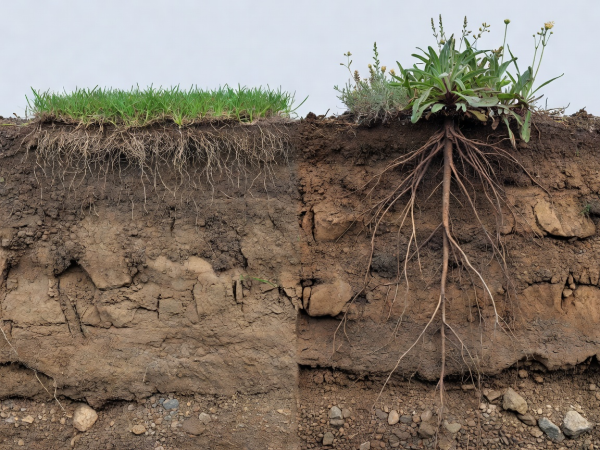
Stratified Matrix: The 4-Tier Native Arid Guild
Our primary temperate and semi-arid landscape deployments deploy these specific functional strata:
Eliminating the "Landscape Irrigation Trap"
By establishing perennial root channels during a single autumn planting cycle using fungal teas, these guilds eliminate the need for permanent automated sprinkler pipes, solenoid valves, backflow preventers, and electric timers. Estates save upwards of 120,000 gallons of potable water annually per quarter-acre converted.