Living Rhizosphere Protocols
Every 1% increase in soil organic carbon allows the earth to hold an additional 20,000 gallons of moisture per acre. We remediate compacted suburban soil into a living microbial sponge.
The Soil Food Web as Underground Infrastructure
Modern housing developments utilize heavy diesel earth-movers that crush the natural capillary porosity of the subsoil, followed by spreading a cosmetic 2-inch veneer of sterilized "fill dirt." The result is an impermeable hardpan that repels rain and suffocates root systems.
Our biological remediation rejects mechanical inversion and chemical nitrogen sprays. Instead, we re-establish the fungal hyphae network: specifically arbuscular mycorrhizae (Glomus intraradices and Glomus mosseae). These microscopic filaments weave between soil aggregates, secreting glomalin—a hydrophobic glycoprotein that cements sand, silt, and clay particles into porous crumb structures with massive hydraulic conductivity.
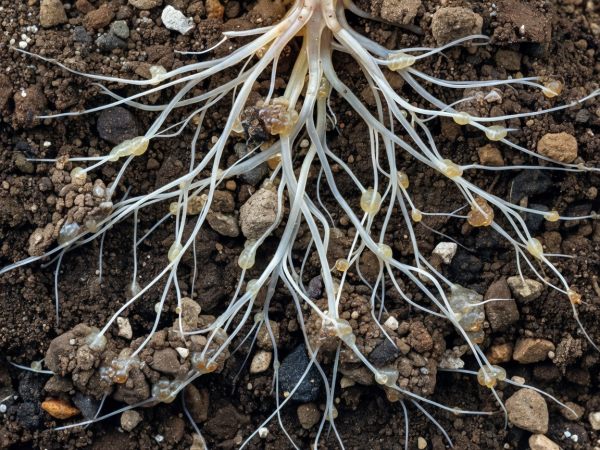
The 3-Phase Soil Regeneration Sequence
Our agronomic soil construction protocol follows three non-negotiable chronologic steps:
Rhizosphere Performance Benchmarks
Within 18 months of enacting our living rhizosphere protocol on compacted suburban parcels, laboratory assays typically confirm:
- Zero chemical fertilizer requirement to maintain vivid botanical vigor.
- Elimination of standing surface water pools within 45 minutes of a 2-inch precipitation event.
- Tripling of native earthworm populations (Lumbricus terrestris) creating passive vertical drainage shafts.
- Sequestration of 4.2 metric tons of carbon equivalent per acre each year in stable humus fractions.